 Into The Music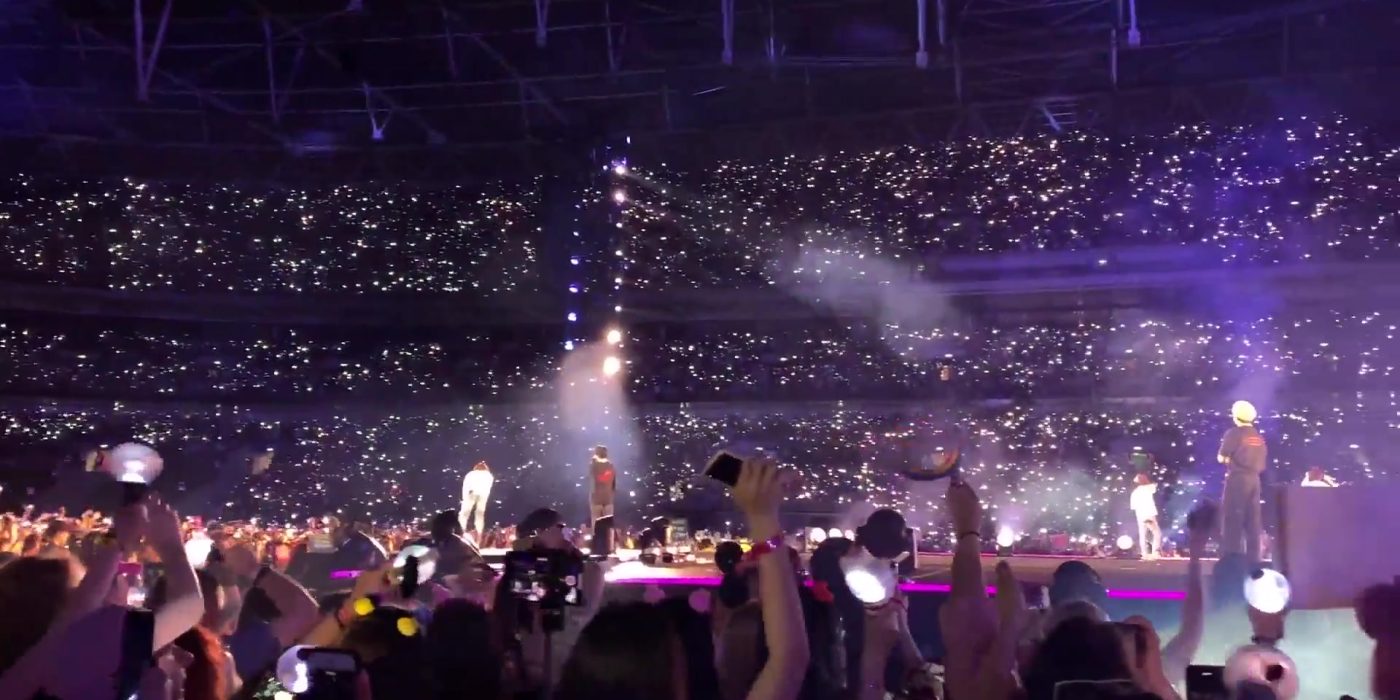
You knew this was coming. After two years of mandatory military service scattered across seven men, BTS made their full-group return this week in a way that only BTS can – by playing a free concert in Seoul’s Gwanghwamun Square that reportedly drew crowds in the hundreds of thousands, streamed live on Netflix, and coincided with the release of their new album Arirang.
Let’s be direct about what this moment means: BTS returning isn’t just a pop event. It’s a geopolitical occasion. The South Korean government effectively leaned into the group’s cultural export value when drafting their military service timeline, and now their comeback is threaded through with national significance – hence naming the album after one of Korea’s most iconic folk songs.
Arirang, the record, is ambitious in ways that feel genuinely surprising. The collaborator list reads like a fever dream from a music nerd’s group chat: Tame Impala, JPEGMAFIA, Flume, El Guincho. That’s not a lazy grab for Western credibility – that’s a deliberate attempt to blur every line between K-pop, psychedelia, noise rap, and electronic music. Whether it works across a full album we’ll be dissecting over the coming weeks, but the ambition is undeniable.
RM, performing mostly seated due to an ankle injury, was still the gravitational center of the concert. The group debuted tracks including Body To Body, Hooligan, and Aliens in front of a crowd that had waited four years for this moment. Netflix reported it as one of their biggest live streaming events ever.
Here’s the honest take: BTS returning healthy, creative, and politically unbroken after mandatory military service is itself a kind of statement. They didn’t have to make a record this weird. They could have played it safe. Arirang suggests they’re not interested in safe.
The world tour kicks off shortly. If you thought the pre-hiatus ARMY was devoted, you have not seen anything yet.
I am not ashamed to say I full-on screamed when the news dropped!! The wait felt eternal and I know BTS isn’t exactly C-pop but the way fandoms across Asia connected over them during the military service years was genuinely something. The Arirang title alone, naming a comeback album after a traditional Korean folk song, that’s such a layered statement. Welcoming them back with SO much love 💙
My daughter made me listen to BTS about two years ago and I thought she was out of her mind. Then I actually sat down and paid attention and, okay, the production on some of those records is genuinely incredible. The harmonies! Anyway apparently they broke records at this Seoul concert and I believe it. When you combine that kind of musicianship with that kind of loyal audience, records are going to fall.
I must confess I came to BTS quite late, through my students who played me their recordings with some insistence, and at first I thought, this is very polished, very professional, but where is the soul? Then I listened more carefully, the way I listen to a Beethoven sonata, looking for the phrase that breaks open. And I found it. The production on some of their records is extraordinary by any standard. This return concert sounds like it was very significant. Sometimes art must be interrupted to become itself again.
Ivan, I hear you , but I’d push back gently on the soul argument. I said the same thing about hip-hop acts I grew up with once they went mainstream, that the production got too slick, too calculated, and I had to eventually admit I was confusing rawness with authenticity. The real test isn’t whether the craft shows its seams. It’s whether the feeling is there underneath the polish. From what I’ve heard of their work, there’s something underneath the choreography and the production budget that isn’t hollow. I don’t love everything about the K-pop machine but BTS specifically has earned a more careful listen than most of us old-school purists gave them at first.
broken records on the first run back. sure. also probably sounds like a stadium full of lasers and choreography. not my thing.
nate you’re not wrong about the spectacle but those crowds are *tight*. i’ve spun after k-pop acts before and the energy carry is real. lasers or not, the room was activated.
I’m curious what the live show actually looked like technically , arena productions at this scale after a two-year gap often have either a retooled stage setup or they lean hard on archival visual assets to bridge the absence. From the shows I’ve attended at similar scale, the first night back is rarely the tightest; the second or third night of a run is usually when you hear what the production is actually capable of.
The thing that gets me about the BTS return narrative is the military service framing , the involuntary hiatus, the imposed silence that the article calls out. There’s something almost Radiohead Kid A-era about it: a band disappears under circumstances partly outside their control, and the reunion becomes freighted with meaning that a normal album cycle wouldn’t carry. Whether Arirang earns that weight or just benefits from it is the actual question. The record has to work on its own terms, separate from the mythology of the comeback. That’s always the hardest thing after an absence this significant.
Kurt’s point about the Radiohead parallel is genuinely worth developing. What I keep returning to is the idea of imposed silence and what it does to an artist’s relationship with their audience , though I’d note that Radiohead’s withdrawal after OK Computer was chosen, which is quite different from a state-mandated service requirement. The more apt comparison might be to what happened to Elvis after his army stint in 1958, where the two-year gap produced genuine questions about whether he’d return as the same artist. BTS clearly have, at least based on what we’re hearing about the Seoul show. Whether the recorded output matches that energy remains to be seen.
TWO YEARS!!! The fact that they came back with a full Seoul concert that broke records on their first run back is just , I don’t have words?? BTS doing a mandatory military pause and then returning like no time passed is the kind of thing that only happens when the music is actually good AND the fans kept the faith. I cried, I’m not even going to pretend I didn’t cry.
I cried a little reading this, not gonna lie. Two years is such a long time to wait for something you love, and they came back and just , broke records. There’s something about a group that goes through that kind of imposed separation and still chooses each other that gets me every time. Music that survives distance always means more.
The ‘broke records’ framing in the headline is doing a lot of work here that I’d want to unpack. Record for what, exactly , ticket sales in Seoul? Streaming numbers on release day? Social media impressions? In thirty-plus years covering tours, I’ve noticed that ‘record-breaking’ has quietly become one of the most elastic phrases in music PR, and it usually means something genuine happened but the specifics wouldn’t fit in a headline. That said, a full-group return after staggered military service is a genuinely difficult logistical and emotional thing to pull off, and if the Seoul show delivered, that’s worth saying clearly without the superlatives.