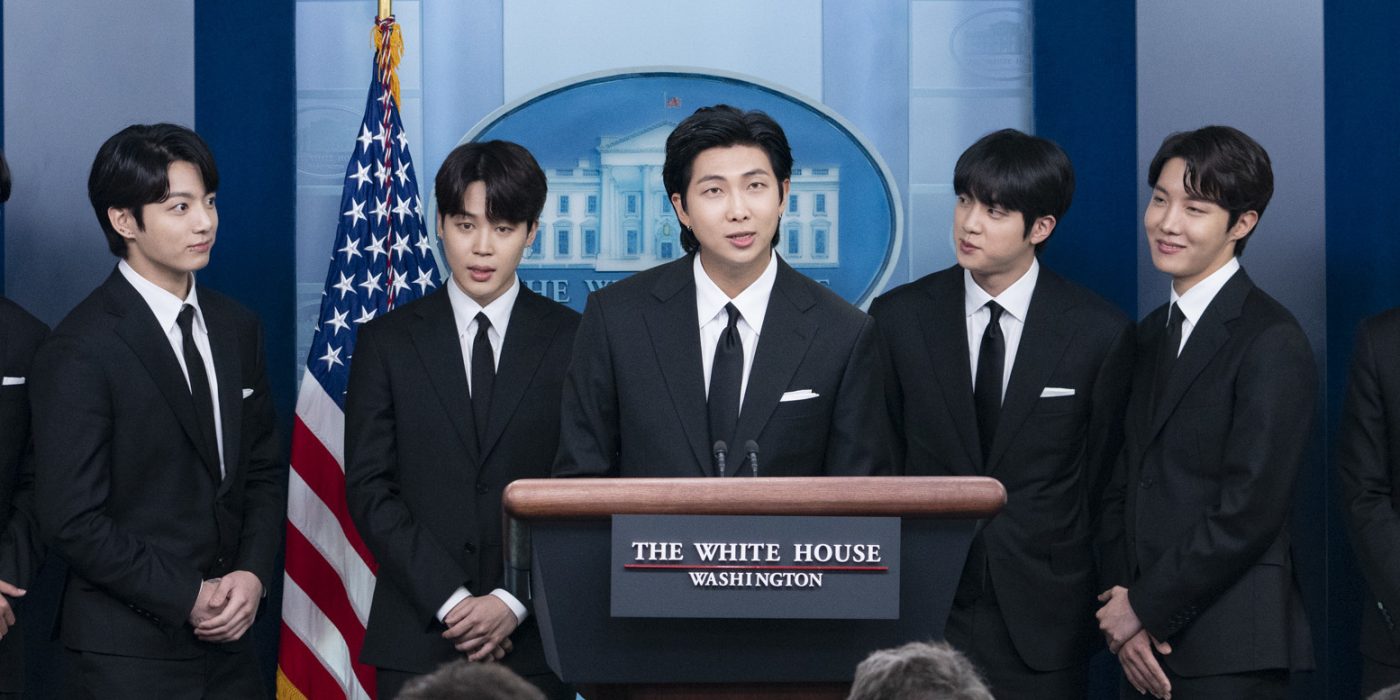
The temptation with BTS is to review the event rather than the music. The comeback. The military service concluded. The Netflix-streamed stadium concert. The ARMY waiting at fever pitch. All of that is real, and all of it shapes how Arirang lands in the world. But let’s try to talk about the album itself, because Arirang is genuinely doing something more interesting than its cultural moment requires it to.
Start with the collaborators: Tame Impala, JPEGMAFIA, Flume, El Guincho. This isn’t a list assembled to chase crossover radio play. It’s a list that suggests the group spent their time in military service thinking carefully about what kind of music they wanted to make when they came back, and arrived at something deliberately difficult to categorize. Kevin Parker’s psychedelic textures, JPEGMAFIA’s chaotic noise rap sensibility, Flume’s crystalline electronic production – these are sounds that don’t naturally coexist, and threading them through a K-pop framework is either hubris or genius, possibly both.
The tracks premiered at the Gwanghwamun Square concert suggest the record leans into its contradictions rather than resolving them. Hooligan is the sharpest early listen – a track that sounds like what happens when you give seven men who’ve been through genuine hardship a beat that feels like the end of something. Aliens is stranger and more experimental than anything BTS has made in their commercial peak, and that’s either brave or alienating depending on your tolerance for a pop group that refuses to simply be a pop group.
There are moments where the ambition outpaces the execution – some of the more experimental passages feel unmoored in ways that might frustrate listeners who want the emotional directness of their earlier work. But emotional directness is arguably what named the album: Arirang, the centuries-old Korean folk song about longing and displacement, gives the record its philosophical center. Coming home, missing home, the idea that home might no longer be quite what you left.
For a band that exists at the intersection of pop product and genuine artistry, Arirang makes a strong case for the latter. Time and repeated listening will tell us how much of it holds. Right now, it holds more than expected.