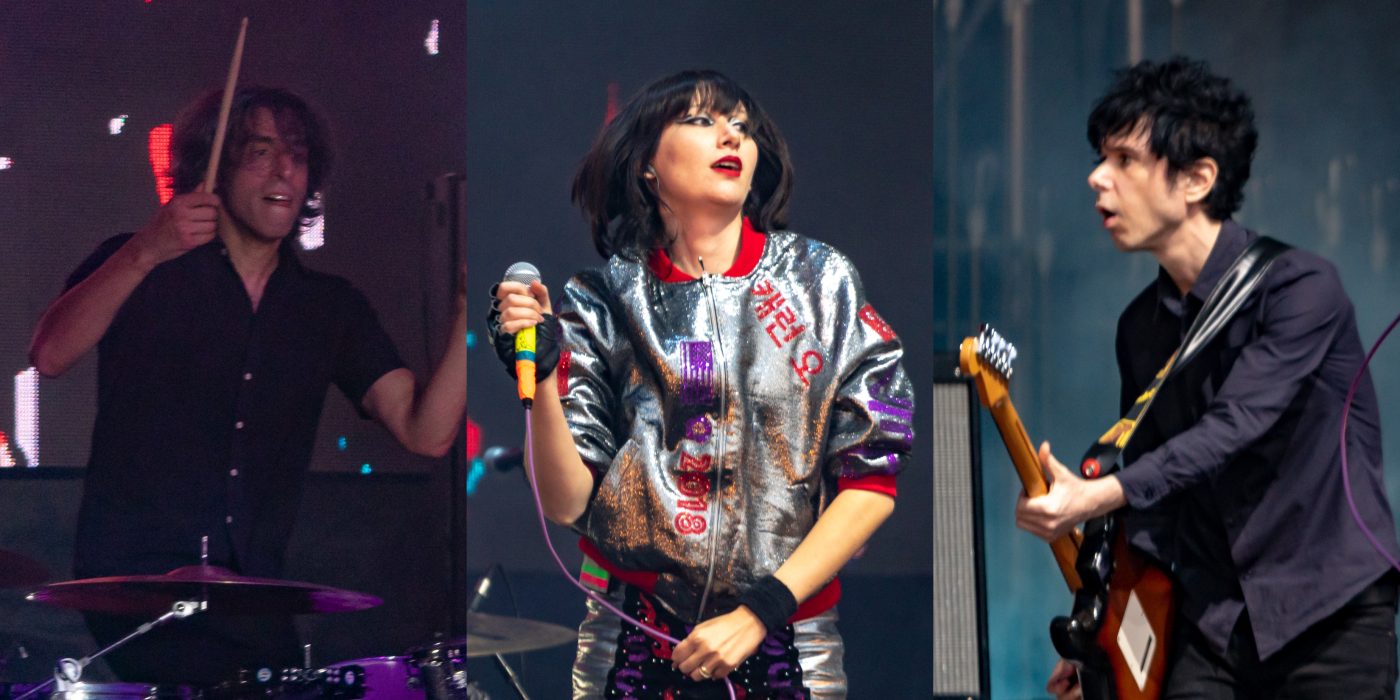
Twenty years ago this month, Yeah Yeah Yeahs released Show Your Bones and divided their audience with such precision that it almost felt intentional. The band that had arrived in 2003 with Fever to Tell – a serrated, sexually charged album that felt like it had been written on the edge of a nervous breakdown – suddenly wanted to slow down. They wanted space. They wanted songs that breathed.
The reaction was predictable and, in retrospect, somewhat unfair. The critical consensus at the time was something like: good album, wrong band. As if Karen O was supposed to remain permanently at the voltage of “Pin” or “Date with the Night,” spitting electricity and moving like a creature from a different species than the rest of us. The idea that she might want to write something quieter, more interior, more strange in a different way seemed to confuse people.
Twenty years later, Show Your Bones sounds indispensable. It also sounds like the record that actually contains the DNA of everything the Yeah Yeah Yeahs did afterward.
The album opens with “Gold Lion,” which is practically a thesis statement: here is a band asking you to sit still with them. The riff is circular and patient. Karen O’s vocal is rich and strange, pulling syllables in directions that feel less like performance and more like incantation. Nick Zinner’s guitar is doing something it never quite did on Fever to Tell – it is suggesting rather than attacking. If the debut was a band trying to set the room on fire, “Gold Lion” is a band deciding they would rather haunt it.
“Cheated Hearts” is the song that probably explains why Show Your Bones survived its own initial reception. It is a structurally perfect piece of rock music – the build, the chorus payoff, the way everything aligns without ever feeling mechanical. It sounds effortless in the way things only do after a lot of work. If you play it for someone who has never heard the Yeah Yeah Yeahs, they will be hooked before it ends.
What the album got right, and what people were initially too impatient to notice, is that the restraint was the point. Fever to Tell worked on adrenaline. It was great on adrenaline. But you cannot run on adrenaline forever, and the bands who try end up producing diminishing returns of the same sound until the whole thing falls apart. The Yeah Yeah Yeahs made a smarter choice. They made an album that cost something emotionally – that required Karen O to inhabit a more exposed, less armored place – and it holds up because of that cost.
Brian Chase’s drumming across the record deserves more attention than it usually gets in the anniversary conversation. He is doing something subtle here: matching the dynamics of the writing rather than driving past them. On a more aggressive album, that restraint would feel like a limitation. On Show Your Bones, it is the reason the loud moments land.
“Warrior” and “Phenomena” are the moments where the band tested how far they could push the new territory. “Warrior” in particular sounds like nothing else in their catalog – orchestrally inflected, almost gothic in its staging, with O at her most theatrically strange. It is an acquired taste that rewards acquisition.
The narrative around this album has always been that it was a pivot, a detour, a sideways move before the band course-corrected with It’s Blitz! in 2009. That framing undersells it. Show Your Bones is not a detour. It is the record where Yeah Yeah Yeahs figured out they did not have to be one thing. That discovery made everything that followed possible – the disco turns, the orchestral experiments, the long silences between projects and the explosive returns. A band that knows it does not have to be cornered into a single mode is a band that can keep going.
At 20, it sounds like a band growing up in public and refusing to let the audience vote on whether they were allowed to.