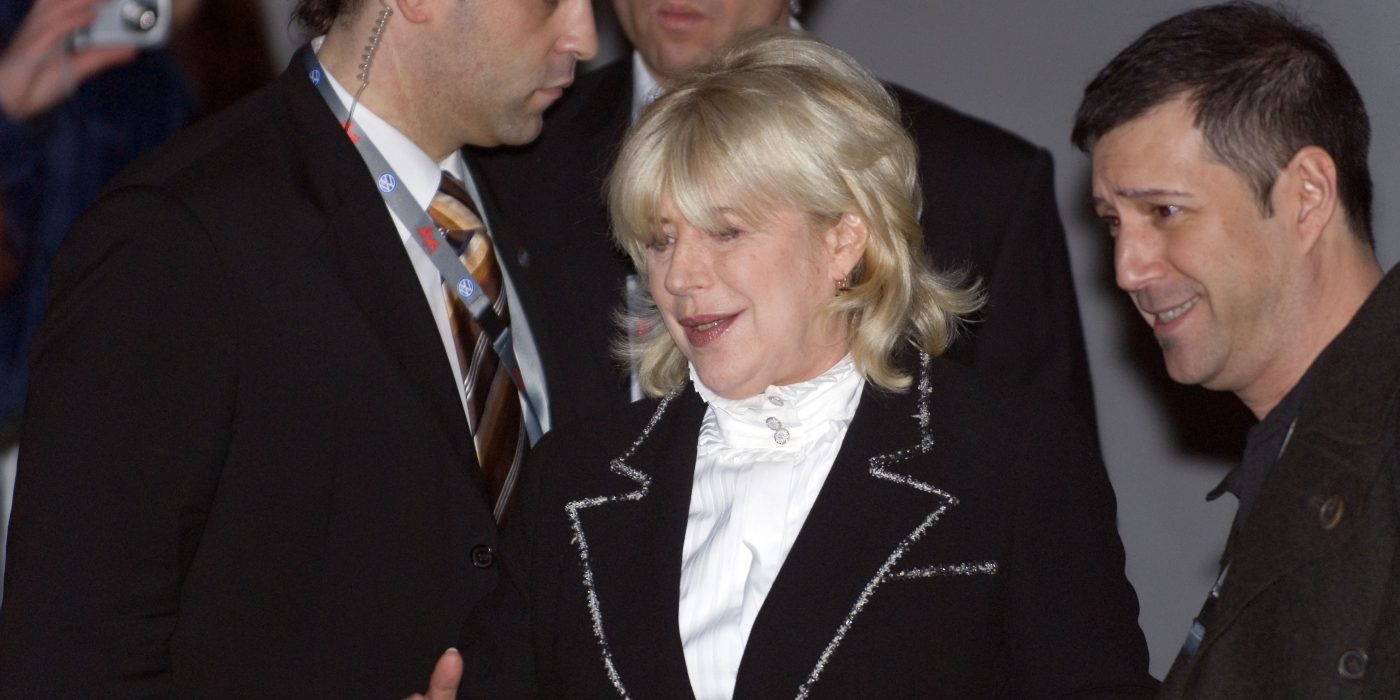
Last week, the Barbican Centre in London hosted a tribute concert for Marianne Faithfull, who died in January 2025 at the age of 78. The event was tied to the release of Broken English, a new documentary about her life. The lineup was not a collection of people who needed the exposure: Jarvis Cocker, Beth Orton, Anna Calvi, Rufus Wainwright, Nadine Shah, Samantha Morton, Ed Harcourt. The house band featured Colin Greenwood of Radiohead, Adrian Utley of Portishead, and Rob Ellis. Someone made good decisions about who belonged in that room.
Faithfull’s catalog is the kind that invites either careful curation or disaster, and tributes for artists with complicated legacies tend to go one of two ways: they either illuminate the work or they reduce it to a highlight reel. The Barbican show, by all accounts, did the former.
Cocker sang “Sliding Through Life on Charm” from the 2002 album Kissin Time – not the obvious choice, not the flashy pick, but the right one for a performer who understands the value of restraint. Orton performed both “Sister Morphine,” which Faithfull co-wrote with Mick Jagger and Keith Richards (a credit she fought to have recognized for years), and “As Tears Go By,” written for her by Jagger, Richards, and Andrew Loog Oldham when she was seventeen. The pairing made a point without spelling it out: here is the song that was made for a teenage girl to sell, and here is the song she helped write from inside a destructive relationship. The span between them contains her whole story.
Calvi took on “Falling Back” and the “Broken English” title track. Wainwright covered “Ballad of the Soldier’s Wife,” a Bertolt Brecht adaptation from Faithfull’s 1985 period. The song selection across the evening mapped the whole arc of her career – the early 1960s pop, the mid-70s rock, the late-70s reinvention, the 2000s autumnal period – without forcing a narrative of redemption that would have been dishonest. Faithfull’s story is not a simple redemption arc. It is more interesting than that.
Faithfull spent much of her career being described in relation to other people – Rolling Stones girlfriend, Keith Richards ally, Mick Jagger’s muse. The tribute got at something the biographical framing often misses: she was primarily a performer who grew into a songwriter, and the work she made in the latter half of her career was genuinely strange and gutsy in ways that had nothing to do with anyone else in her orbit.
Broken English (the 1979 album, not the documentary) is the obvious landmark. It was a record that sounded like a woman rebuilding herself out of available materials – punk, electronic, cabaret – and it still sounds like very little else made in its era. The 1979 title track, which Calvi performed, is a piece of genuine anger: political, cold, furious. It was not what people expected from the 1960s pop girl, and that was exactly the point.
The Barbican show did what the best tribute concerts do. It made the case that the work outlasts the biography, and that Marianne Faithfull had more of it than the standard narrative gives her credit for. A documentary and an evening of performances will not change the shorthand. But they’re a start.